



Lam Dong

Lam Dong is located in the Tay Nguyen region, 300 km from Ho Chi Minh City and 200 km from Nha Trang. Situated at 1,500 m above sea level, Dalat has a cool climate. The annual average temperature is 18oC. The population is mainly composed of Kinh people, along with Kho Mu, Ma, Hoa, Nung, Tay, and Chu Ru ethnic minorities.
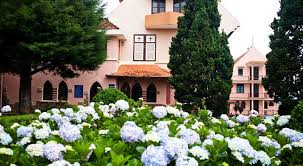
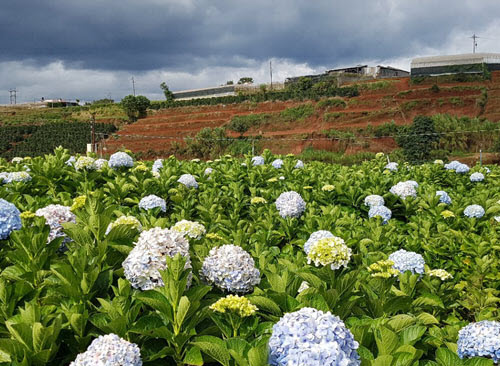
The city is decorated with a vast variety of flowers. Beautiful flowers such as rhododendron, cherry, mimosa, hydrangea, rose, daisy, and dahlia are all grown here. Dalat offers an harmonious combination of natural scenery and historical sites.
Lam Dong is the third and the largest plateau province on the Central Highlands. It is also the highest province lying on a plain the average height of which is about 1,500 meters above sea level. Lam Dong is a forest province with forest coverage accounting for 70 per cent of the total area.
The mountain resort town of Dalat is the capital of Lam Dong. The climate Dalat boasts is that of a temperate zone. Few places in the tropical Vietnam have been offered that gift by nature.
More than 50 years ago Dalat has become famous for its favorable climatic conditions which are very useful for rehabilitation purpose. Perches on a plain 1,500 meters above sea level, Dalat offers an average temperature of about 10oC in winter time and 20oC in summer. Meteorologists have rated Dalat the city of ever lasting spring due to its favorable climatic conditions.
Thanks to the warm weather the whole city of Dalat is a great garden of flower in blossom the year round. Dalat is also famous for its expanse of pine forests and many beautiful water falls and lakes.
Lake of Sighs
This is a natural lake and enlarged by a French - built dam. The lake is six kilometers to the north east of the city. It is situated on top of a high hill covered with pine forests. The lake-scape looks very poetic with the vast and tranquil water surface being compared to a human being in meditation. Standing on the edge of the lake visitors can see a small earth path running towards the forests. The only sound that can be heard comes from the pine forests where the path disappears. The continuous sound from the forests make ones think of repeated sighs from an invisible human being. The existence of the lake has been surrounded with many love stories and legends with sorrowful endings when the heroines always drowned themselves in the lake to keep for ever their true love they had once enjoyed.
One legend has it that Mai Nuong and Hoang Tung met here in 1788 while he was hunting and she picking mushrooms. They fell in love and sought their parents' permission to mrry. But at that time Vietnam was threatened by a Chinese invasion and Hoang Tung, heeding Emperor Quang Trung's call-to-arms, joined the army without waiting to tell Mai Nuong. Unaware that he had gone to war and afraid that his absence meant that he was no longer in love with her, Mai Nuong sent words to Hoang Tung to meet her at the lakeside. When he did not turn up she was overcome with sorrow and, to prove her love to him, threw herself into the conveniently located lake and drowned. Thereafter, the lake has been known as the Lake of Sighs.
Golf course
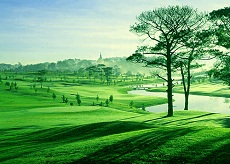
The golf course is located in the centre of the city. The 18-hole golf course meeting international technical standards become operational in early 1994. The golf course runs pass several low hills which are close to the famous Ho Xuan Huong (Xuan Huong Lake). the unique design of the course combined with picturesque natural landscape has made the course in Dalat very attractive to golf players.
Palaces
Dalat has three magnificent and big palaces which are always referred to as Palace 1, Palace 2 and Palace 3. The architectural designs for the three places are made to French design. They were built on top of the hills which are located in beautiful natural surroundings. The places are accessible through long flights of brick steps for walk and gently descending paths for cars. The path is completely covered with broad canopy of pine trees.
Palace 1 and Palace 2 were owned by French high ranking officials during the French domination of Vietnam more than 40 years ago.
The third and last palace was owned by the last king of the Nguyen Dynasty, Bao Dai. Interior arrangement of the palace is open to public viewing. There remain some pictures and photographs of the king, the queen and their princes and princesses.